
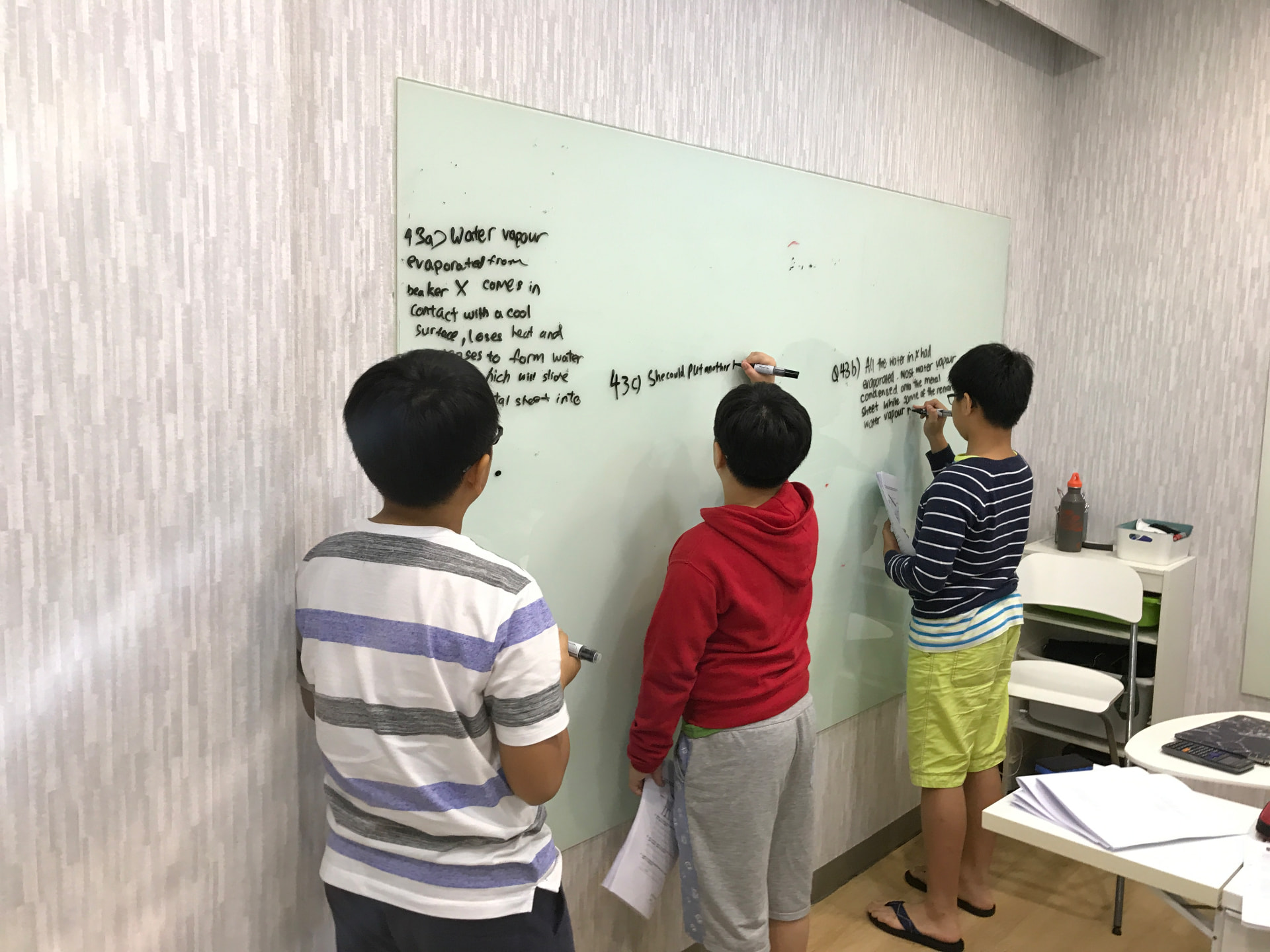
When parents in Singapore look for tuition, one of the first choices is class size. Large lecture-style classes are cheaper per hour, but decades of education research, and our own experience at AZKEN, point the same way: small groups simply produce better learning. Here is why.
Every student is visible
In a class of thirty, a quiet student can go weeks without answering a single question. In a group of six to eight, there is nowhere to hide, and that is a good thing. The tutor sees every student's working, hears every misconception the moment it appears, and corrects it before it hardens into a habit.
Feedback is immediate and specific
Visibility only helps if something is done with it. Learning science is clear on this: feedback works best when it is fast and specific. In a small group, a tutor can mark working during the lesson, point at the exact step where the thinking went wrong, and have the student redo it on the spot. In a large class, that same feedback arrives a week later on a returned worksheet, when the moment has passed.
The pace adapts to the group
Seeing clearly and correcting quickly only work when the tutor can bend the lesson around the students. Large classes must teach to the middle. The strongest students wait, and the struggling students get left behind. A small group lets the tutor slow down when the class hits a hard concept and speed up when it clicks, so almost no lesson time is wasted.
- More questions asked and answered per student, per lesson
- Misconceptions corrected in minutes, not weeks
- Tutor knows each child's weak topics by name
- Students learn from hearing classmates' questions too
- Confidence grows because every child participates
Small group is not one-to-one, and that is fine
This raises a fair follow-up question. Parents sometimes ask whether one-to-one is better still. For most children, a well-run small group is actually the sweet spot. Students hear questions they did not think to ask, see different solution methods from classmates, and learn to explain their thinking out loud, which deepens understanding. It also costs far less than private tuition.
What this looks like at AZKEN
Our classes at Ang Mo Kio are deliberately kept small so that every student writes on the whiteboard, answers questions, and gets their working checked in every single lesson. If you would like your child to experience the difference, WhatsApp us at 8166 1212 or book a trial class through our Schedule page. You can also read what parents say about our lessons in their reviews.
Frequently Asked Questions
What is a good class size for tuition?
For most children, six to eight students is the sweet spot: small enough that the tutor sees every student's working, large enough that students learn from each other's questions. Lecture-style classes of twenty or more rarely give either.
Is one-to-one tuition better than small group tuition?
Not necessarily. In a well-run small group, students hear questions they did not think to ask, see different methods from classmates, and learn to explain their thinking aloud. It also costs far less than private tuition.
How do I know if a tuition class is actually working?
Look for visible engagement: does your child write, answer and get corrected during the lesson, or just watch? A tutor who knows each child's weak topics by name is a good sign that the class is small enough to matter.
How quickly should we expect to see improvement?
Feedback that is fast and specific, lesson by lesson, is what moves marks, so habit-based problems often improve within weeks. Concept gaps take longer, but the small-group setting keeps them from hiding.
Want personalised guidance for your child?
Every student learns differently. At AZKEN, Mr Ken Lim designs personalised learning plans that address your child's specific needs and goals.
Mr Ken Lim
Founder & Lead Educator, AZKEN
- Teaching Mathematics & Science since 2010
- Founder of AZKEN
- Primary Science, Primary Mathematics and Secondary Mathematics educator
With over a decade of experience teaching Science and Mathematics in Singapore, Mr Ken Lim has helped hundreds of students build confidence and achieve their academic goals. He believes every child can excel with the right guidance and encouragement.